
Replacing failed lawn beneath a mature holly
A narrow strip of struggling grass became a layered ornamental bed designed around dry shade, mature roots, changing soil, and the way the garden is approached.
- Location
- Raleigh, North Carolina
- Growing zone
- 8a
- Project
- One-Bed Planting Plan
- Completed
- 2026
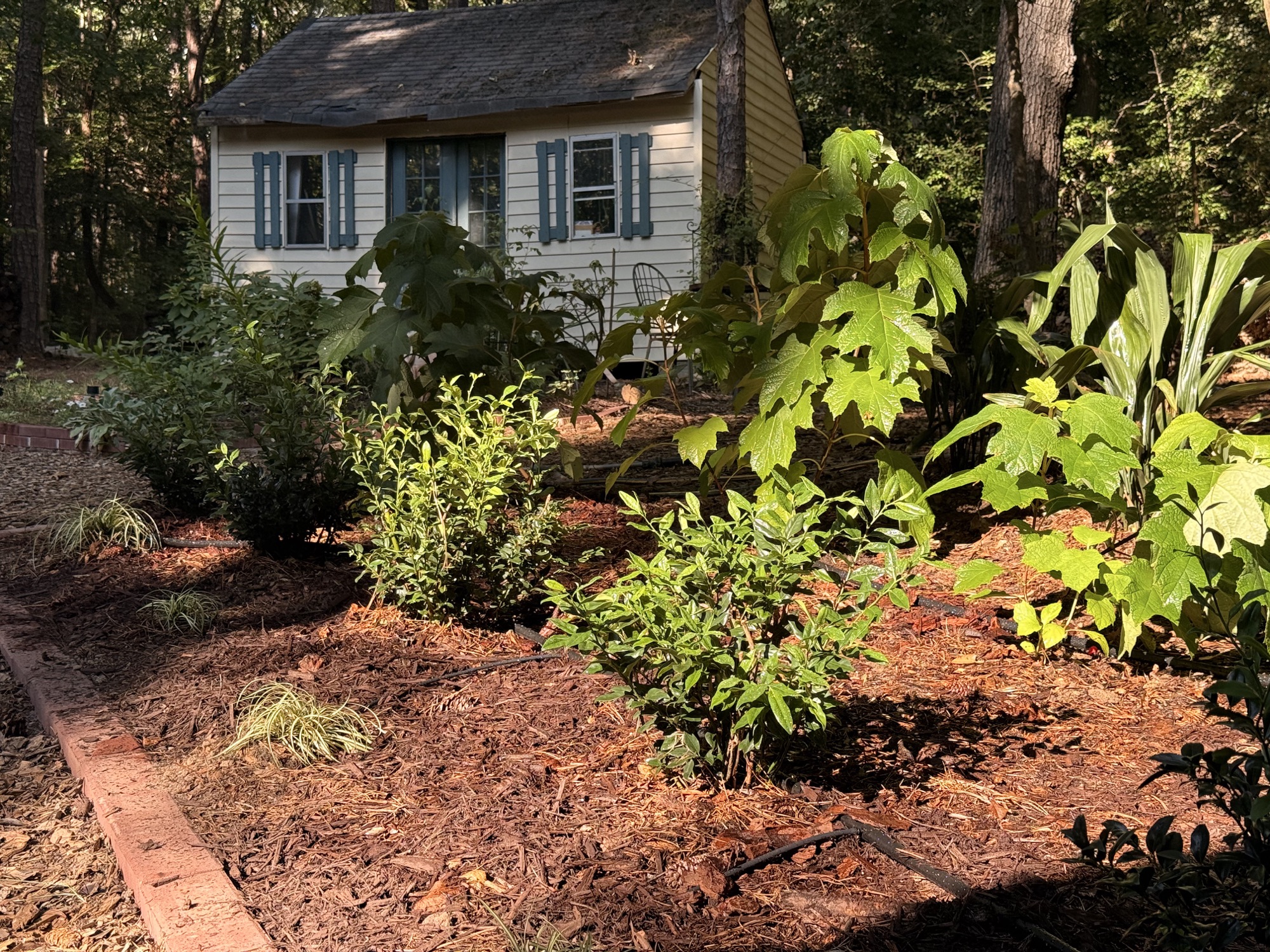
The lawn was the symptom.
The useful shift was not finding a tougher grass. It was accepting that this strip beneath a mature holly needed an ornamental role designed around the conditions already there.
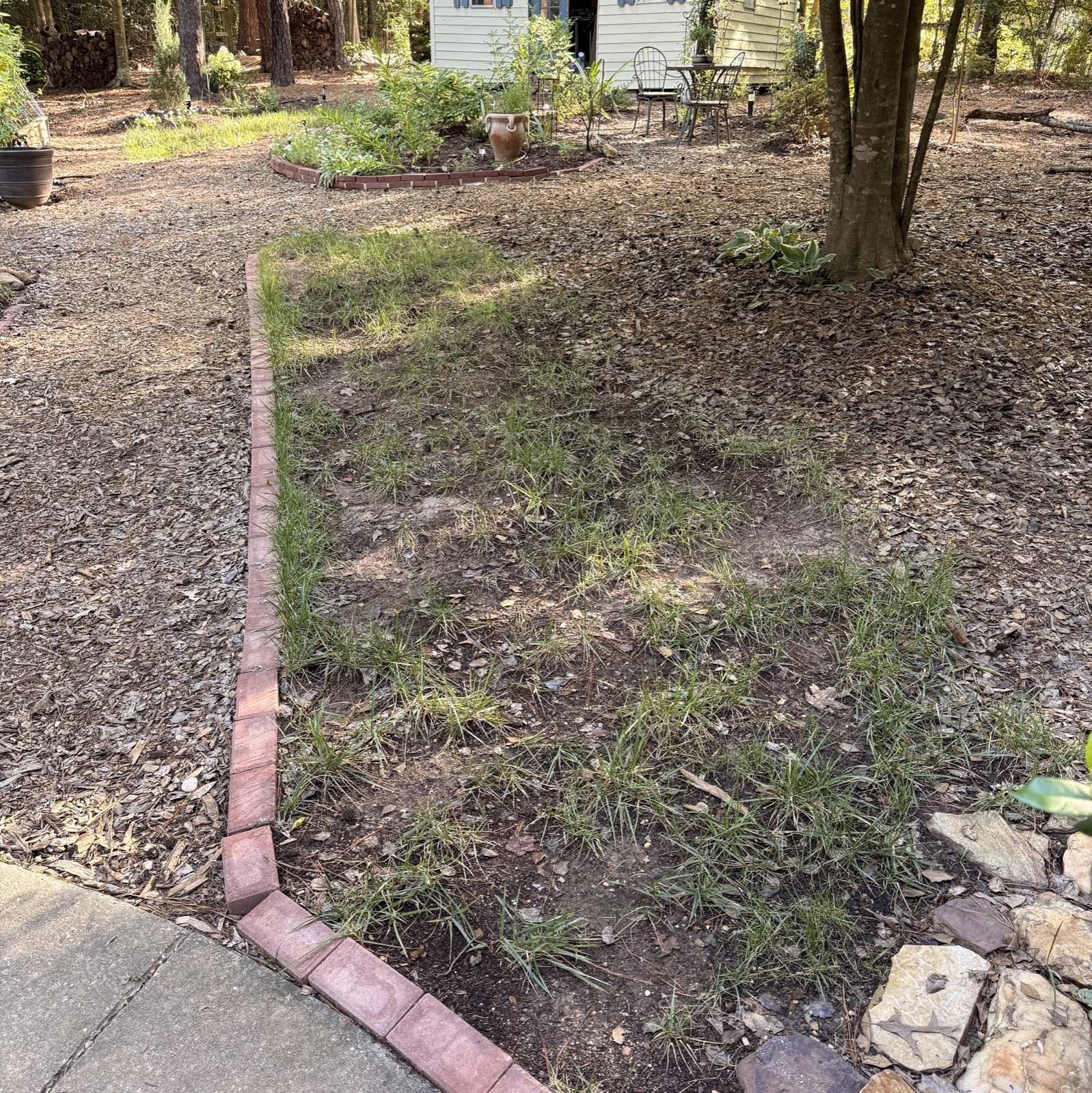
A small bed with several different conditions.
Closer to the holly, the soil is dry and crowded with roots. Toward the path, the soil becomes heavier clay. The evergreen canopy also keeps much of the rain from reaching the ground.
The larger context changed the answer.
From farther away, the scale of the holly, its low canopy, the path, and the surrounding woodland competition become much clearer. The bed needed to read as part of the approach into the backyard, not as an isolated planting strip.
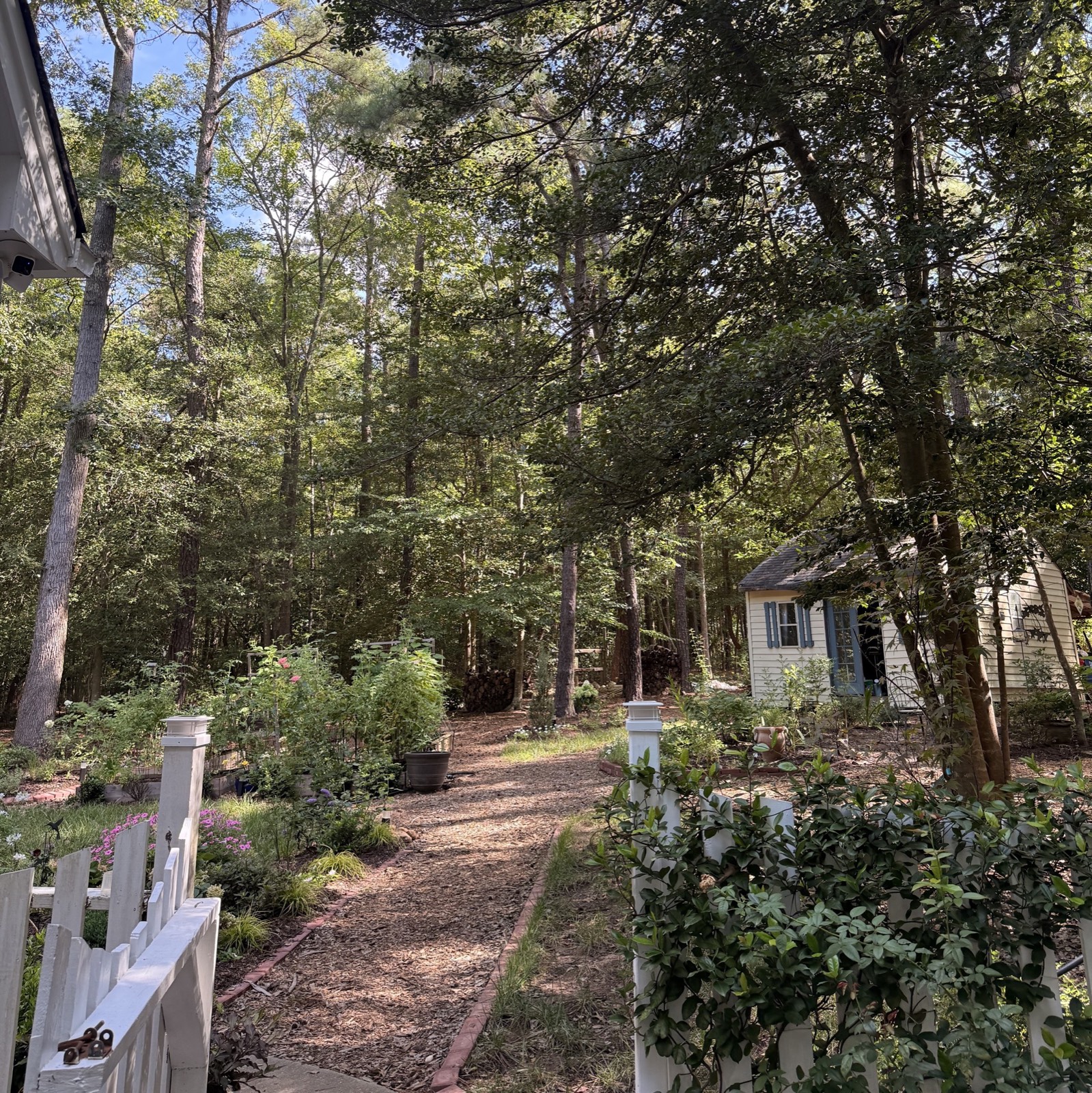
The site sets the limits.
- Dense evergreen holly canopy 01
- Root competition from the holly and surrounding trees 02
- Compacted clay soil with very little rain beneath the canopy 03
Watch the decisions take shape.
In this 8:26 walkthrough, I show how the changing soil, dry shade, and mature roots led to the layout, plant choices, installation, and irrigation.
Filmed in my own Raleigh garden while working through the project.
Site conditions · planting design · working around roots · installation · what comes next
Watch on YouTubeFive plants, layered for every season.
Seventeen plants turn the former lawn into a layered bed. Evergreen structure holds the composition through winter, while flowers, fragrance, fall color, and bright foliage carry it through the rest of the year.

Cast iron plant
× 3Back row, beside the holly stump
A tough evergreen mass for the deepest shade, giving the back of the bed broad-leaved structure.
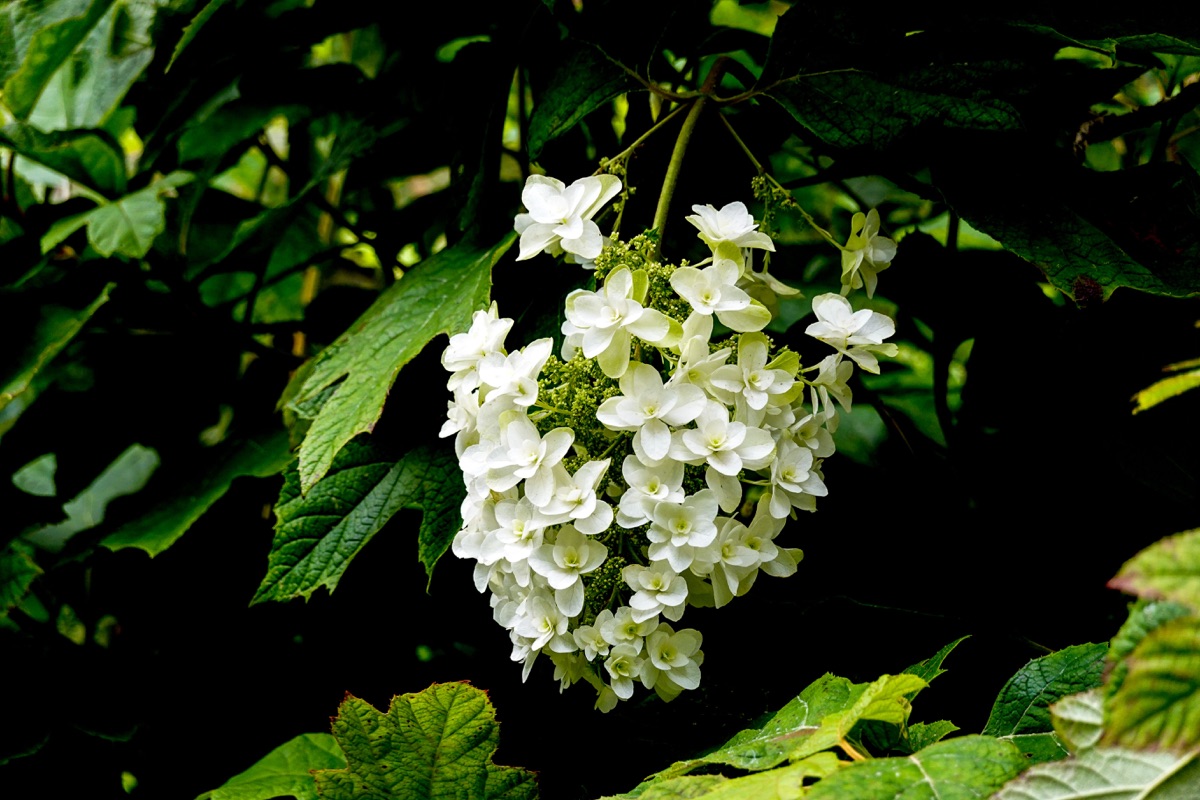
Oakleaf hydrangea ‘Autumn Reprise’
× 4Middle row
A reblooming flowering layer selected for summer bloom and strong fall foliage color.
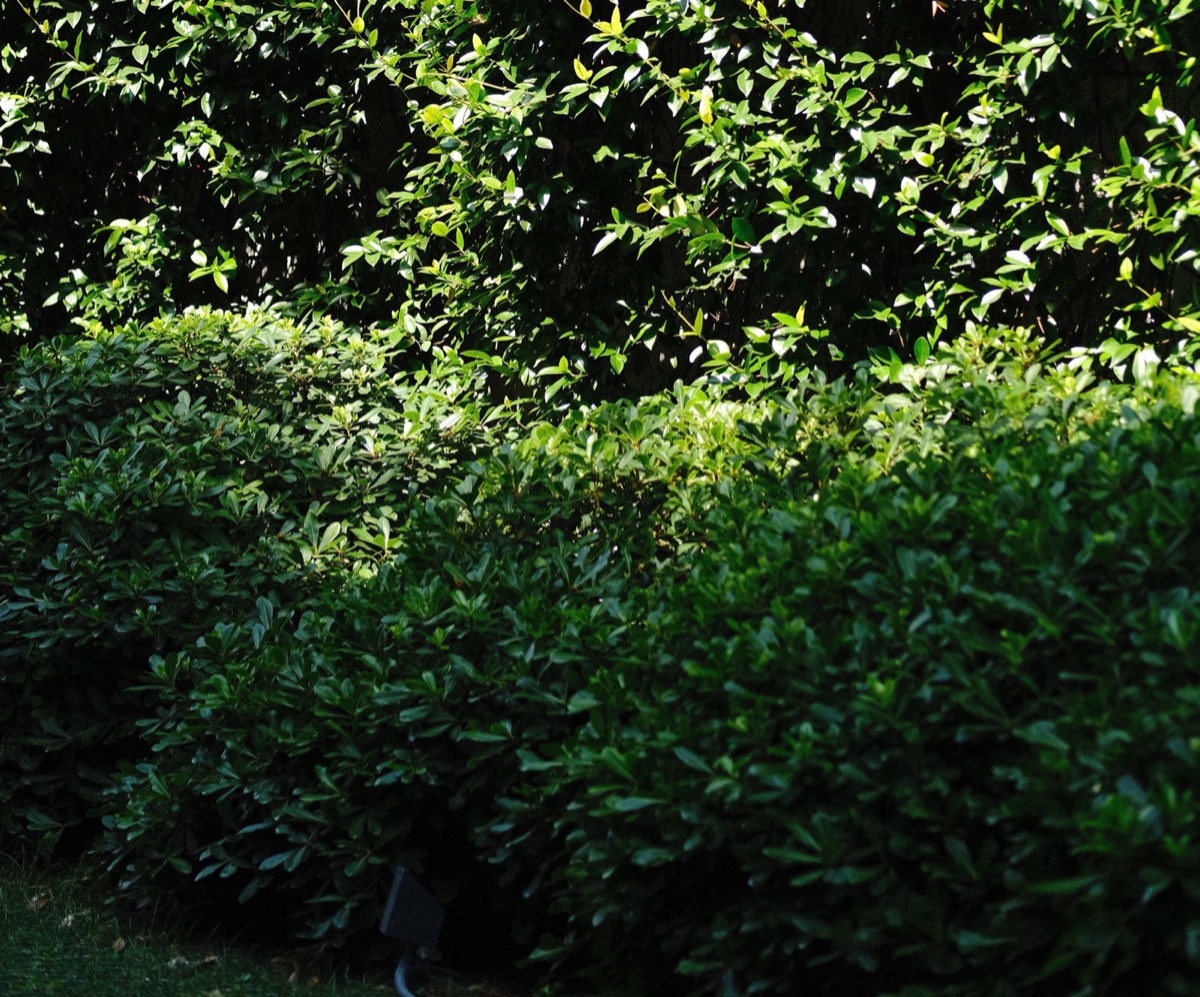
Sarcococca
× 5Along the path
Evergreen structure close to the walkway, with winter interest and fragrance where it can be enjoyed.

Carex ‘Evergold’
× 4Front edge
Fine, bright foliage that contrasts with the larger evergreen leaves and traces the bed edge.
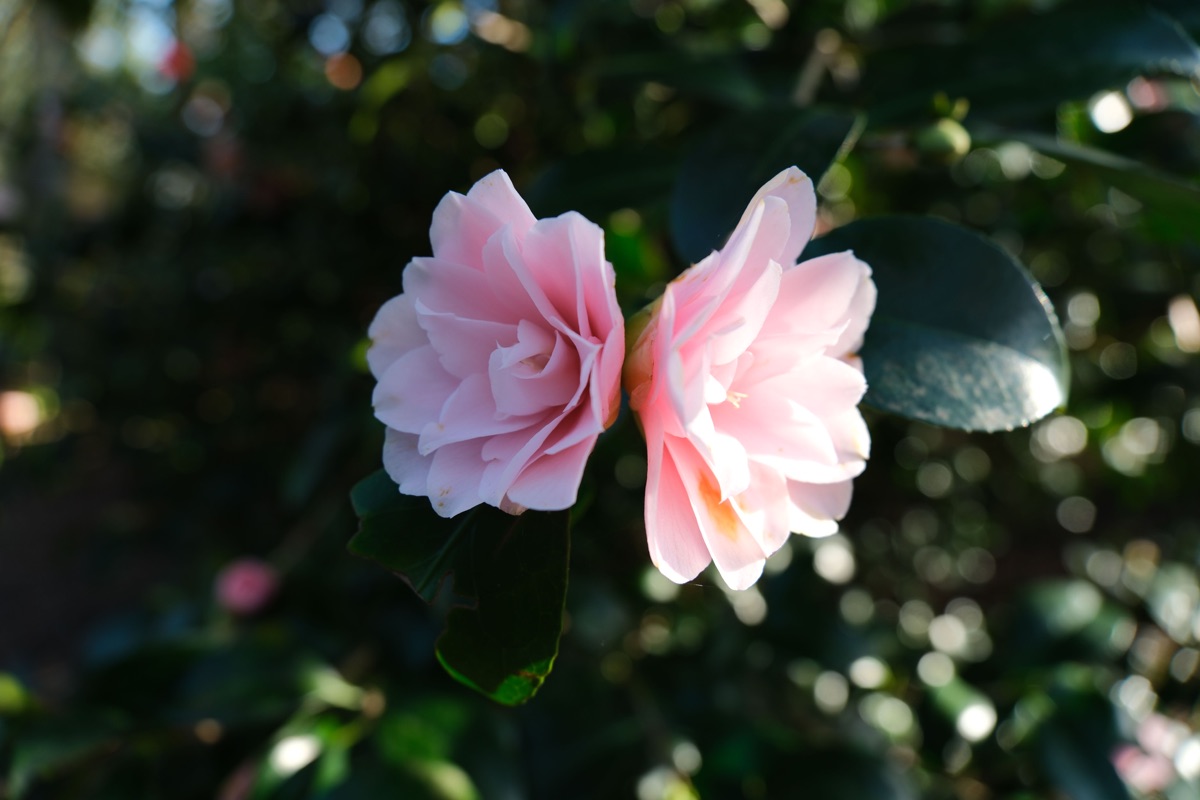
October Magic® Pink Perplexion™ camellia
× 1Right side at the bed entrance
Placed in the slightly sunnier pocket for flowers and evergreen color. In winter, it screens the bare hydrangea stems at the first view into the garden.
How the layers fit together.
The taller deciduous layer sits behind the evergreen path structure. The camellia occupies the brighter entrance pocket and provides winter screening when the hydrangeas are bare.
- Cast iron · ×3
- Oakleaf hydrangea · ×4
- Sarcococca · ×5
- Carex · ×4
- Camellia · ×1
A beginning, not an instant finish.
The plants are spaced for their mature proportions rather than packed for an immediate effect. As the hydrangeas, camellia, and evergreen layers establish, the open ground will close and the intended structure will become stronger.
Over the next year, I will be watching how moisture moves through the bed, how each plant handles its pocket of light, and where the layers need adjusting.
Have a difficult bed of your own?
Bring me one ornamental space and we will find a clear direction for what stays, what changes, and what the garden needs next.
Tell me about your garden