
The layout
- Dwarf Joe Pye weed · ×3
- New England Aster · ×2
- Purple coneflower · ×5
- Black-Eyed Susan · ×3
- Butterfly Milkweed · ×3
- Threadleaf coreopsis · ×5
- Prairie dropseed · ×4

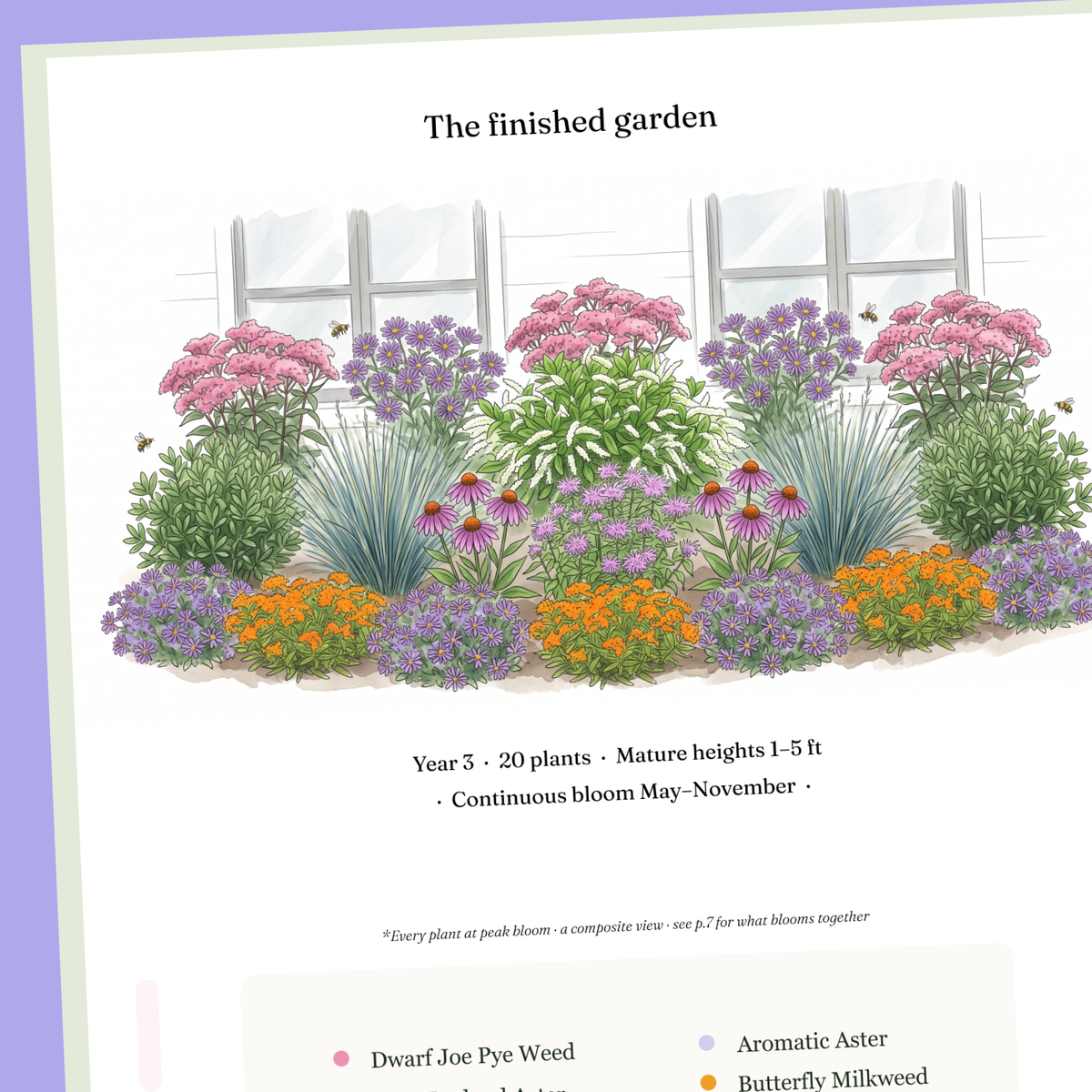
Seven tough native perennials that keep something blooming from June to October. Plant it once in a sunny 10×6 ft bed; by year two it needs little more than one spring cutback.
What blooms when
The plants
-
3×Dwarf Joe Pye weed Eutrochium dubium 'Little Joe'
The butterfly magnet of the bed - swallowtails will queue for it in August.
4 ft -
2×New England Aster Symphyotrichum novae-angliae
Carries the bed in October when everything else is winding down.
4 ft -
5×Purple coneflower Echinacea purpurea
Leave the seed heads standing - goldfinches work them all winter.
3 ft -
3×Black-Eyed Susan Rudbeckia fulgida 'Goldsturm'
Spreads politely into gaps; divide every third spring if it gets ambitious.
2 ft -
3×Butterfly Milkweed Asclepias tuberosa
Monarch host plant. Deep taproot - pick its spot once, it hates moving.
2 ft -
5×Threadleaf coreopsis Coreopsis verticillata 'Zagreb'
Blooms for months with zero attention; shear lightly in July for a fall rebloom.
15 in -
4×Prairie dropseed Sporobolus heterolepis
Fine-textured grass that edges the bed and smells faintly of popcorn in fall.
2 ft
This is the starter version. There's an upgrade.
The complete plan is the garden I'd actually plant: nine plants instead of seven, evergreen structure so the bed doesn't vanish in January, and bloom stretched from May to November. Plus every step between the idea and a planted bed:
- Exact positions on a 1-ft grid - transfer it with two strings and twenty minutes.
- Exact counts, real prices, six NC nurseries by name - one shopping trip, no over-buying.
- The first-year survival guide - what "normal" looks like, and the six problems that actually happen.
$14 Launch price · Instant PDF · 14-day guarantee
Planting this? Map it in BloomMap and watch it grow year over year.
Get BloomMap on the App StoreMore recipes
All recipes → Design concept
The No-Fuss Mailbox Strip
A 12×3 ft strip for the hottest, driest spot you own - the mailbox, the driveway edge, the hellstrip. Six natives that handle reflected heat and never ask for the hose after year one.
 Design concept
The Good-Neighbor Screen
A living fence for a sunny property line - five evergreens in a staggered double row instead of one long hedge of identical trees. Mixed screens survive what monoculture rows don't: when disease or a bad winter takes one plant, you lose a tooth, not the whole smile. Eye-level privacy by year three; a 15-foot green wall by year six.
 Design concept
The Native Foundation Bed
The foundation bed is the most-seen, least-loved planting in America: a row of sheared meatballs with two weeks of interest a year. This is the all-native answer - one evergreen anchor, an inkberry ribbon that stays below the windowsill, and native shrubs handing the bed to each other from March to November, with berries and bark carrying winter.